
Brazzaville, November 1, 2025—PRESS AFRICA— In the Central African sub-region, the labor market is at a crossroads. While some countries report relatively moderate unemployment rates, others like the Republic of Congo or Gabon show very high levels, reflecting marked structural weaknesses in employment, training, and the informal economy.
A Few Recent Indicators
In 2024, the Central African Republic recorded an unemployment rate of approximately 5.9% of the active population. In Congo-Brazzaville, the rate was estimated at 19.8% in 2024, down from 20.1% in 2023. For the central region as a whole, a study by the Economic Commission for Africa indicated that in 2022, states like Gabon and the Republic of Congo showed rates « well above » the regional average. These figures, however, hide major differences based on age, gender, and level of education: the 2022 study showed that youth unemployment reached 16.6%, compared to about 9.8% for the general active population.
Why Such Disparities?
Several factors explain this situation. There is a very prominent informal economy: in many countries of the sub-region, a large portion of jobs is not recorded in formal statistics; this can skew the « official » unemployment rates. There is also the dependence on raw materials: several Central African economies rely heavily on oil, wood, or minerals. In the event of an external shock, formal jobs falter. Another factor remains the weakness of industry and the structured tertiary sector: the lack of stable jobs in manufacturing or formalized services pushes a part of the population into the informal sector. Also noteworthy is the mismatch between training and employment: the education and vocational training system struggles to produce the skills required by employers in the sub-region. Furthermore, young people and women are more vulnerable: unemployment more heavily affects the youth and women, which worsens inequalities in the labor market.
Economic and Social Consequences
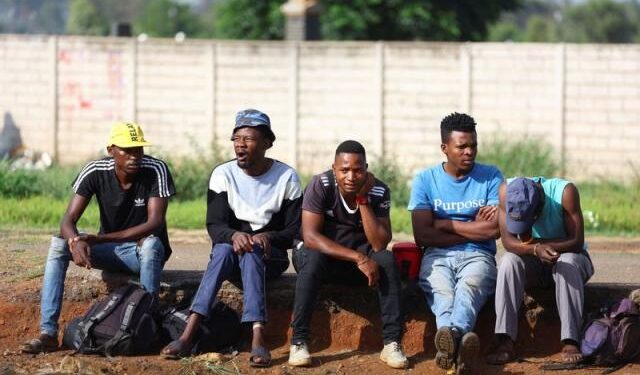
High unemployment or long-term precarious employment lead to, among other things, a loss of income for many families, reducing domestic savings and investment capacity; an increased reliance on the informal sector, which limits contributions and weakens social protection; social and political instability, as high youth unemployment rates create a risk of frustration, migration, or even tensions; and reduced room for maneuver for public policies, as tax revenues remain low and social budgets are constrained.
Some Avenues for Improvement
To reverse this trend, certain strategies appear useful. These include strengthening professional and technical training, in alignment with the needs of growth sectors (digital, agro-industry, services); promoting the formalization of employment and supporting micro-enterprises / SMEs to expand the supply of stable jobs; developing economic diversification by reducing dependence on raw materials and promoting labor-intensive sectors; implementing targeted policies for young people and women to reduce disparities and increase inclusion; and improving the collection of reliable data on the labor market, which would allow for better-targeted employment policies.
The employment situation in Central Africa in 2025 reveals stark contrasts: some countries seem to have their labor market under control, while others remain caught in cycles of high unemployment and persistent informality. The challenge is not only economic but also social: for growth to translate into quality jobs, political will, structural reforms, and a dynamic public-private partnership are essential.
Editor: Jaurès BOKO