Johannesburg, 2 November 2025—PRESS AFRICA— In 2025, Africa is facing a worrying reality: the use of and dependence on psychoactive substances among young people has emerged as a major public health problem, with marked variations by region, substance and social vulnerability.
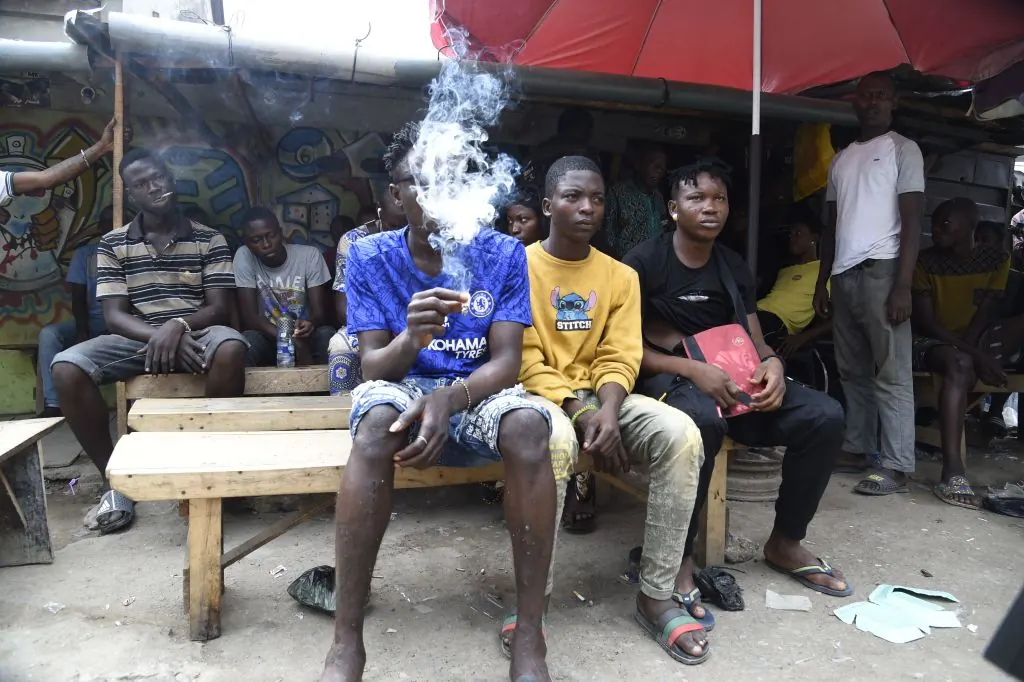
According to recently published reports and scientific reviews, substance use among adolescents and young adults in sub-Saharan Africa remains high and uneven: alcohol, tobacco and cannabis remain the most widely used substances, while the non-medical use of opioids (notably tramadol) and the arrival of powerful synthetic narcotics (nitazenes) are rising rapidly in several countries in West and Central Africa. These new substances, sometimes mixed with traditional drugs, expose young people to increased risks of overdose and health complications.
The available figures vary widely between studies and countries, but recent epidemiological reviews estimate that in some areas the prevalence of use of at least one substance among adolescents can reach 30–45%. Rates are generally higher in disadvantaged urban settings, among out-of-school youth and those exposed to conflict or high unemployment. Moreover, access to treatment services remains dramatically low: Africa has one of the lowest rates of treatment coverage for substance use disorders in the world, leaving the majority of young people without appropriate care.
Several structural factors explain this situation. Weak mental health and addiction care systems, social stigma, the absence of suitable school prevention programmes, and a growing illegal supply — linked to the rise of trafficking corridors and the mixing of local and international markets — contribute to young people's increased exposure. To this are added cultural and economic factors: recreational alcohol use, easy access to illicitly sold opioid medicines (tramadol), self-medication practices and psychosocial pressures.
Local examples show the scale of the human challenge: in some countries in southern and western Africa, local organisations report dangerous practices (injections, consumption of unknown mixtures, "kush" mixed with synthetics) that have already led to overdoses and an increase in communicable infections. These phenomena are pushing mothers, neighbourhood associations and NGOs to launch education campaigns and psychosocial support units, often with limited means.
At the regional level, specific dynamics can be observed. In West and Central Africa, there is a rise in tramadol and the detection of nitazenes in certain mixtures, adulterated "kush" cannabis markets and growing exposure despite rudimentary chemical analysis capacity. In southern Africa, there is an increased presence of methamphetamine and injection practices in urban pockets, with a strong correlation observed between drug use and HIV-related risks in some contexts. East and North Africa are characterised by variations from country to country, but with warning signs of non-medical use of prescription drugs and of contamination routes linked to drug transit.
Policy and operational responses exist, but remain fragmentary. The African Union and international agencies have stepped up calls to action and youth-focused prevention programmes, promoting peer education, training for health personnel and the strengthening of national drug surveillance capacities. However, implementation is hampered by limited resources, competing priorities (security, humanitarian crises) and persistent stigma. Many experts are calling for a change of direction: moving from a purely repressive approach to integrated strategies combining prevention, harm reduction, treatment and social reintegration.
Promising solutions are nevertheless emerging: youth-led community interventions, evidence-based school prevention programmes, integrated mental health and addiction treatment centres, and screening and information campaigns that use social media and peer education. Improving surveillance of drug markets (chemical analysis, rapid reporting) is also crucial to quickly detect the arrival of new and dangerous substances.
In conclusion, 2025 marks a turning point: drug use among young Africans is no longer a marginal phenomenon but a multidimensional crisis that demands coordinated, funded and public-health-centred responses. Without a significant increase in prevention, treatment and harm reduction capacity, African societies risk seeing avoidable human and social losses grow. The main issue remains the political will to invest in solutions adapted to local realities and led by and for young people themselves.
Reporter: Khadidjatou BAWA ALLAH

Leave a Comment