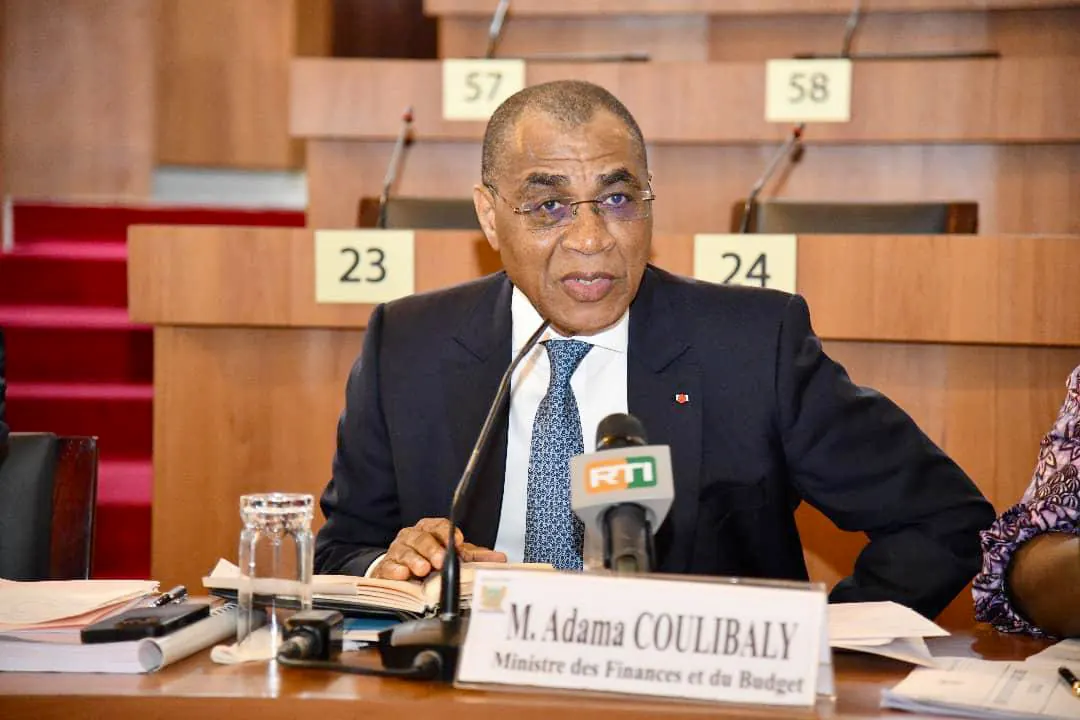
Abidjan, 7 January 2026 – PRESS AFRICA – The Ivorian state budget bill for the 2026 financial year, recently adopted by the National Assembly, stands out for a sharp increase in the resources allocated compared with the previous year and for a clear focus on consolidating growth, strengthening infrastructure and improving social conditions.
A larger, balanced budget
The 2026 budget is set at CFA 17,350.2 billion, up 13% on 2025, reflecting the authorities' ambition to maintain robust momentum in development. Revenue and expenditure are balanced, underscoring the effort at budgetary discipline, even in an uncertain global context.
This significant increase rests on a sharp rise in tax revenue, estimated at CFA 8,193.8 billion, a strategy based in particular on better integration of informal-sector players into the tax system.
The government's strategic priorities
The Ivorian government has clearly steered this budget towards structuring investments and social spending. The main areas of the programme include strengthening public investment, developing human capital, modernising the administration and digital transformation.
At the same time, key ministries see their sector budgets increased, such as the Ministry of Animal and Fisheries Resources, whose appropriations are raised by nearly 24% to support local production and reduce food imports.
Macroeconomic framework and public finance management
On the macroeconomic front, Côte d'Ivoire expects gross domestic product (GDP) growth of around 6.7% in 2026, driven by economic activity and major public works.
The authorities are also maintaining a budget deficit within community norms, at around 3% of GDP, while the tax burden is expected to rise gradually in order to broaden the domestic revenue base.
Finally, according to official forecasts, public debt should remain sustainable, with a slight decline in the debt-to-GDP ratio, confirming efforts at prudent management of public finances in a complex post-pandemic environment.
Stakes and challenges
Despite these positive prospects, several challenges remain. Effective revenue mobilisation requires broader integration of formal and informal economic operators into the tax system, while the implementation of planned investments calls for rigorous coordination among the various public and private actors.
The success of the 2026 budget, which follows on from the 2026-2030 National Development Plan, will be an important test for strengthening the country's economic resilience, reducing inequalities and consolidating the structural transformation of the Ivorian economy.
Writer: BAWA ALLAH Khadidjatou A.

Leave a Comment