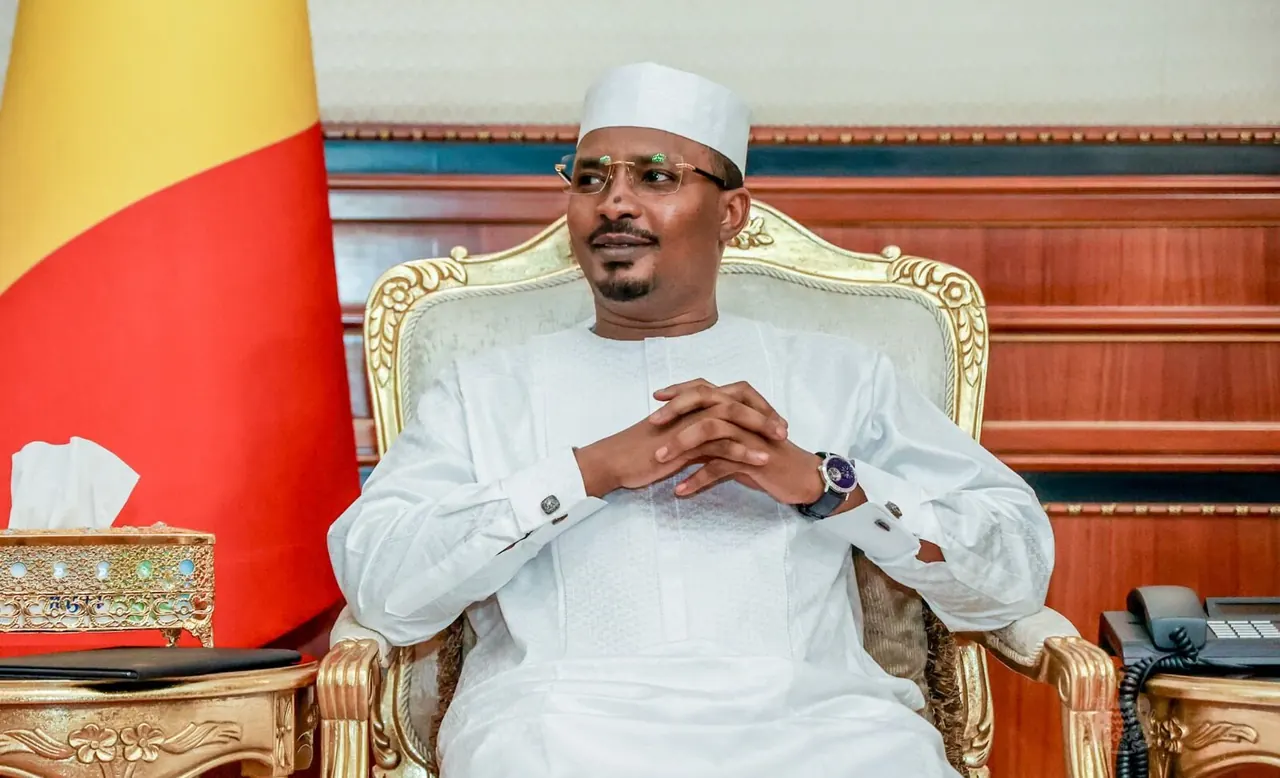
N'Djamena, 6 November 2025 —PRESS AFRICA— The latest Mo Ibrahim Foundation report on governance in Africa once again places Chad among the lowest-rated countries on the continent. With an overall score of 34.8 out of 100, the country ranks 47th out of 54 African states, far behind the regional average.
Chad is once again among the lowest-ranked countries in the 2025 Mo Ibrahim Index of African Governance. Despite some reforms, corruption, insecurity and the centralization of power continue to hold back progress.
A low score despite announced reforms
Chad is struggling to improve its image on the African continent. According to the latest Mo Ibrahim Foundation report, published in late October 2025, the country obtains an overall score of 34.8 out of 100, ranking 47th out of 54. The result confirms the fragility of the Chadian state in terms of governance, despite several reform announcements. "Chad illustrates the challenges Sahelian states face in reconciling stability, security and democratic governance," says an expert at the Mo Ibrahim Foundation.
Governance still too centralized
The Mo Ibrahim Index rates African countries' performance out of 100 points across four pillars. On security and the rule of law, Chad scores 28.2. On participation, rights and inclusion, it manages just 31.4 points. For economic opportunity, the country is rated at 37.5, and for human development it earns 42 points. While progress is noted in economic management, Chad remains undermined by the centralization of power, persistent corruption and tensions in peripheral regions, notably in Tibesti and the Lake Chad basin.
Timid progress over ten years
Between 2013 and 2024, Chad's overall score rose by only 3.7 points, from 31.1 to 34.8. The marginal improvement is mainly due to macroeconomic stabilization and a few public governance initiatives. "The reforms remain very concentrated in N'Djamena. In the provinces, citizens do not feel their effects," stresses Mahamat Ali, a researcher at the Sahel Center for Strategic Studies.
Regional comparison: Central Africa lags behind
Gabon, better rated in 2024 (47.6% out of 100), ranks 26th on the continent with stability over the past decade, followed by Cameroon, which totals 39.9 for 39th place with a trend of 1.5. Over the same 2013-2024 period, Congo-Brazzaville has a score of 38.6, ranking 42nd with a trend of -0.7. The Central African Republic takes 45th place with an average of 36.2 and a trend of 2.1 over the past 10 years. Chad's 34.8 points earned it 47th place with a trend of 3.7 over 10 years. Equatorial Guinea follows in 49th place with an average of 33.9 and a trend of 0.9. This picture illustrates the poor position of Central Africa, where governance remains the weak link in economic and social development.
Positive signals, but limited
The Chadian government is trying to polish its image. In October 2025, 114 public officials were trained and certified in financial management and auditing. With a view to better controlling public spending, the partnership with the African Development Bank (AfDB) has been strengthened. A revision of the transparency code is announced for 2026.
What levers for a lasting recovery?
Chad nonetheless has assets, notably a majority-young and dynamic population, underused agricultural and energy potential, and growing international cooperation (AfDB, UNDP, European Union). However, without effective decentralization and a real fight against corruption, these assets risk remaining theoretical.
In Chad, governing is no longer enough; the country must now govern better. The Mo Ibrahim Foundation's 2025 report confirms the diagnosis: Chadian governance remains behind, held back by corruption, centralization and insecurity. Despite a slight improvement, Chad remains in the bottom quarter of the continent. To reverse the trend, reforms will now have to translate into citizens' daily lives, not just in official reports.
Writer: Saïd TESSILIMI


Leave a Comment