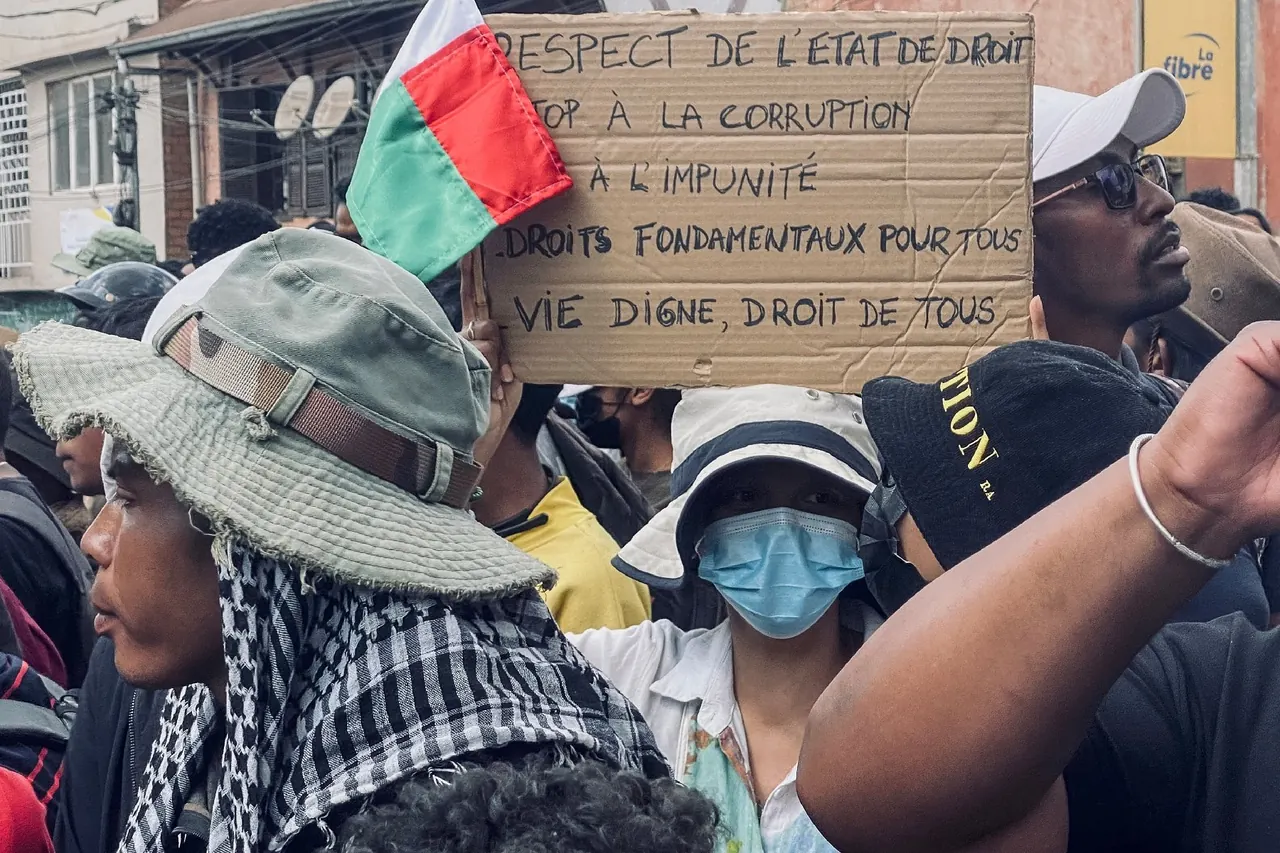
Antananarivo, 24 November 2025—PRESS AFRICA—For more than two decades, Madagascar has gone through recurring cycles of political instability: disputed elections, abrupt changes of leadership, institutional crises and social tensions. Far from being purely political, these upheavals have left a deep mark on the Malagasy economy, holding back its development and heightening the social vulnerability of a country that nonetheless has immense natural resources.
An unpredictable political climate
One of the first effects of political instability is a loss of confidence among investors, both local and international. With each crisis — 2002, 2009, 2018, 2023 — flows of FDI (foreign direct investment) fall sharply. Companies, particularly in the mining, tourism and textile sectors, adopt a wait-and-see approach. Expansion projects are postponed, some contracts suspended, and several investors prefer to turn to environments seen as more stable, such as Mauritius, Rwanda or Kenya.
For a country where FDI accounts for an essential share of the financing of infrastructure and industry, these setbacks have a direct impact on growth.
Tourism at the mercy of crises
Madagascar has one of the richest biodiversities in the world, making tourism a natural engine of development. But it is also a sector that is extremely sensitive to political crises. With each episode of tension, bookings fall, airlines reduce flight frequencies, and hotel operators record historically low occupancy rates. The lack of stability also harms the international visibility of the destination, which struggles to compete with the giants of the African sector.
Sociopolitical tensions are frequently marked by road closures, port disruptions, strikes and administrative blockages. These dysfunctions directly affect trade, notably exports of vanilla, cloves, lychees and minerals.
The private sector regularly complains of delays, shortages and higher transport costs, which reduce the competitiveness of the Malagasy economy.
A heavy social toll
Political fragility spills over into the population's already precarious living conditions. Government uncertainty often brings runaway inflation, a depreciation of the ariary, higher prices for imported goods, a loss of purchasing power and a rise in poverty, affecting more than 80% of households in some regions.
Businesses, faced with an unstable environment, hesitate to hire or cut their workforces. Young people, who make up the majority of the population, find themselves durably shut out of the labour market.
Suspension of international funding
Donors (the World Bank, the IMF, the European Union) often make their aid conditional on institutional stability. Each crisis leads to a temporary suspension of funding, paralysing infrastructure projects, health and education programmes, administrative reforms and investment in energy and agriculture.
This dependence on international aid makes the Malagasy economy particularly vulnerable to domestic political swings.
An immense but under-exploited economic potential
Despite these obstacles, Madagascar has considerable assets: substantial mineral reserves, vast farmland, unique flora and fauna, and a dynamic youth. However, political instability prevents these riches from being fully harnessed. It creates a vicious circle in which economic stagnation fuels social frustration, which in turn feeds new political tensions.
Analysts believe the key to sustained growth lies in consolidating institutions, transparent electoral reforms, more stable governance and an inclusive national dialogue. Without political stability, they say, economic prospects will remain limited despite the country's exceptional potential.

Leave a Comment