
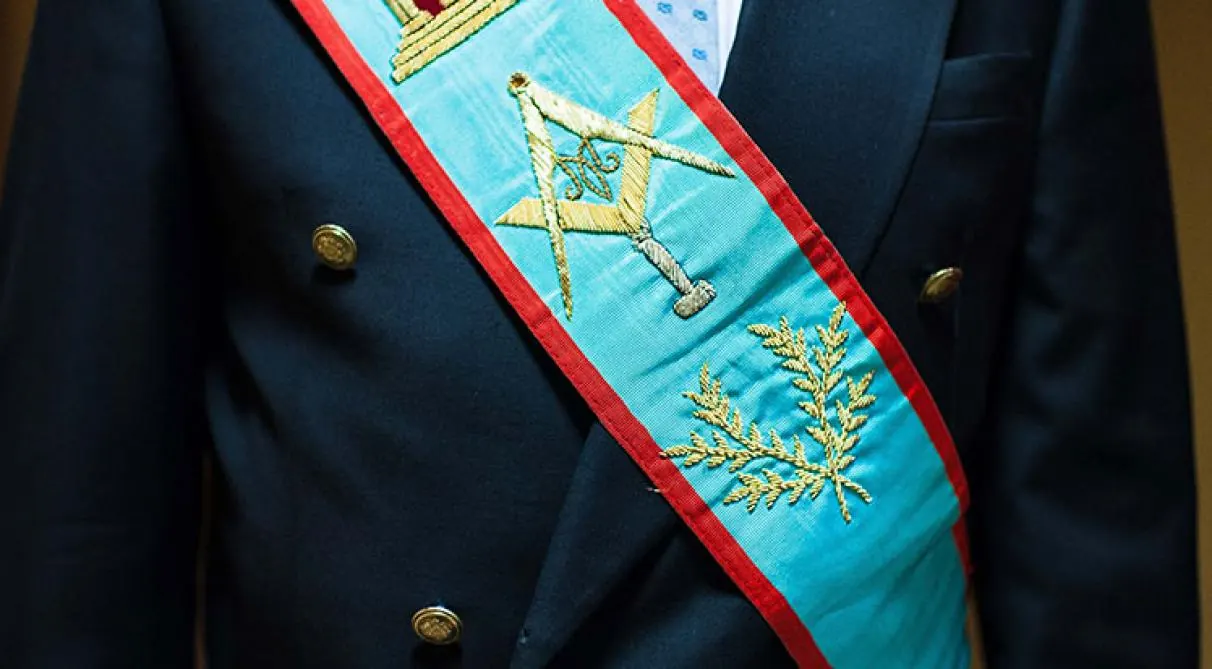
Cairo, 24 November 2025—PRESS AFRICA— Long established in Egypt, where it enjoyed a golden age in the 19th and early 20th centuries, freemasonry remains a subject shrouded in opacity today. Banned since the 1960s, closely monitored by the authorities and largely viewed through the lens of religious and political debates, it no longer has a legal or official framework through which the number of its practitioners can be measured precisely. Yet traces of discreet interest and persistent micro-circles continue to raise questions and prompt analysis.
A deep historical presence
Egypt was one of the first countries in Africa and the Middle East to welcome modern freemasonry. As early as 1798, at the time of the Napoleonic campaign, lodges were formed. In the 19th and early 20th centuries, growth was notable: English, French, Scottish and Italian lodges operated there; notables, civil servants and intellectuals joined the lodges, and freemasonry contributed to the cultural and associational life of Cairo and Alexandria.
But from the 1950s and 1960s, successive regimes associated the lodges with potential political risks. In 1964, Masonic activities were suspended by state decision. Since then, no official Masonic structure has operated legally in the country.
A practice that cannot be quantified
In the absence of recognized lodges, Egypt has no official statistics on the number of active freemasons or sympathizers.
Specialist analysts agree on one point: any precise estimate is impossible, because no regular lodge is authorized; declared Masonic activities are prohibited; international Masonic networks no longer list an Egyptian jurisdiction; and the subject remains contentious in the public sphere. The exchanges that do exist therefore point more to informal micro-circles with no institutional recognition.
Informal networks: a discreet but persistent reality
Despite the official bans, several researchers in the sociology of religion and initiatory movements note the existence of private discussion groups, personal ties with foreign obediences, occasional meetings abroad for Egyptians initiated outside the country, and a form of "cultural freemasonry" centered on philosophical, symbolic or historical interest.
These practices remain, however, marginal, scattered and often unstructured. They allow neither a numerical estimate nor a reliable statistical analysis.
A strict legislative environment
Egypt's legal apparatus tightly regulates unauthorized associations. The authorities prohibit the registration of lodges, monitor gatherings perceived as private or clandestine, and restrict any form of undeclared transnational organization.
This environment makes it impossible for a regular, recognized and structured freemasonry to re-emerge, as can be seen in the Maghreb, West Africa or Europe.
Social perceptions: between mistrust, myth and ignorance
In public opinion, freemasonry in Egypt remains poorly understood, often associated with conspiracy theories, linked to secrecy rather than to its real historical legacy, and approached with caution in the media sphere. This context helps keep the subject in shadow rather than light.
A historical influence
Though no longer active as a recognized institution, Egyptian freemasonry survives mainly in cultural memory: former lodge buildings in Alexandria, the archives of European obediences and traces in the biographies of 20th-century political and intellectual figures. However, its real impact is weak today, and its activity is confined to discreet networks mainly oriented toward the outside of the country.
Egypt was one of the great Masonic crossroads of the Middle East.
But in the absence of legal recognition and in a restrictive political environment, the number of current practitioners remains impossible to quantify, and any networks that may exist in no way reflect the historical importance freemasonry once held in the country.
The archipelago of intellectual influences it once represented is now no more than a set of marginal, discreet initiatives disconnected from any official structure.
Writer: Saïd TESSILIMI

Leave a Comment