24 November 2025—PRESS AFRICA—A sociopolitical legacy claimed by some and loathed by others, it still structures alliances, feeds divisions and shapes ambitions. Thirteen years after the fall of Muammar Gaddafi, Libya continues to live under the heavy shadow of its former leader, as the country still tries to equip itself with unified and stable institutions.
For more than four decades, Muammar Gaddafi built an ultra-centralised regime based on his "Green Book" and a power architecture blending revolutionary committees, tribal networks and control of oil rents.
The fall of the regime was not enough to erase these structures. On the contrary, many local officials who came out of the revolutionary committees have kept a strong community base. Some tribes historically allied with the regime continue to voice support for a return to the order of "before 2011". The fragmented security apparatus has given way to militias that sometimes reproduce practices inherited from the Gaddafi era: centralisation of force, personalisation of local chiefs, a war economy.
Saif al-Islam: the symbol of an expected continuity
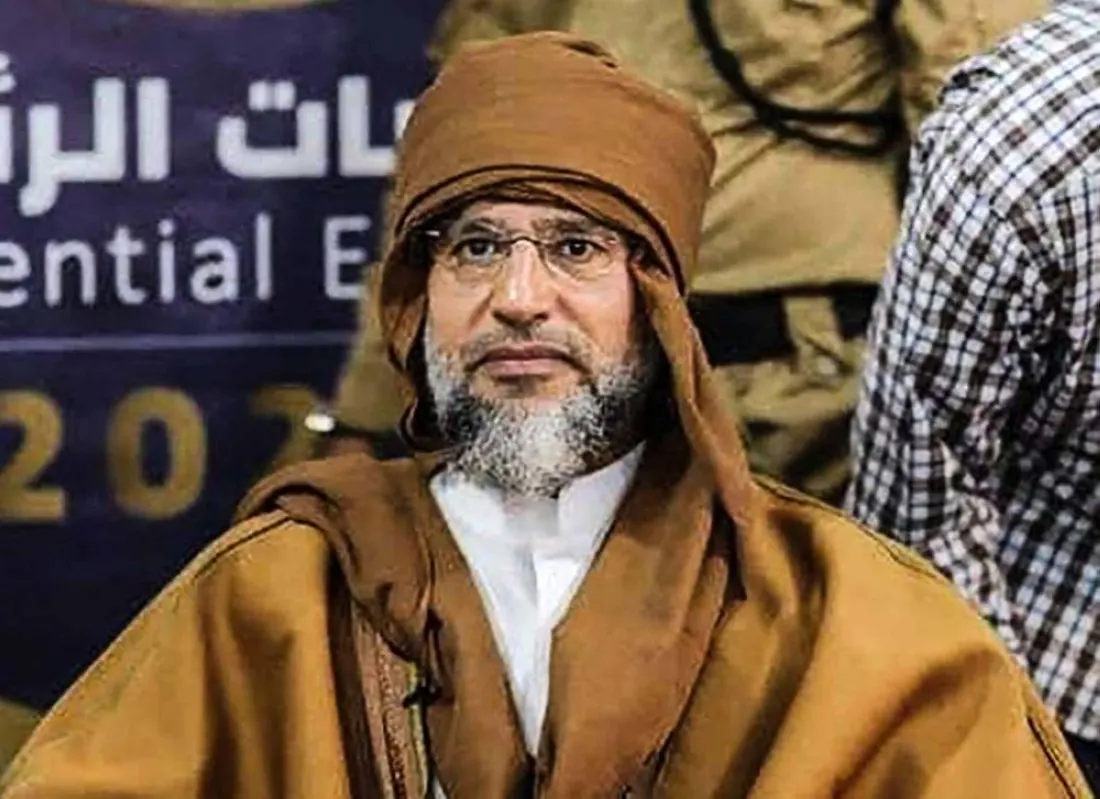
While the Gaddafi legacy long remained diffuse, it took concrete form again in 2021 with the reappearance of Saif al-Islam Gaddafi, the presumed heir of the former leader. Although wanted by the International Criminal Court and still shrouded in mystery, Saif al-Islam has managed to mobilise certain tribes in southern and western Libya, to crystallise a nostalgic narrative around a "stable and unified" pre-revolution Libya, and to reinsert himself into the national political debate as an alternative to the current elites, seen as ineffective.
For part of the population, Saif al-Islam represents a potential return to a strong state, able to secure the borders and restart oil production. For others, he embodies the danger of a return to authoritarianism and impunity.
A tribal-political legacy that is still active
Libyan society remains strongly structured by tribes. Gaddafi's regime not only instrumentalised these structures but also organised a subtle balance between them. Since the regime's fall, the tribes formerly allied with power — such as the Kadhadfa or the Warfalla — have been trying to regain their influence. Tribes that were marginalised under Gaddafi, by contrast, are demanding political revenge.
This competition between tribal blocs continues to slow the building of unified institutions, to fuel regional rivalries between Tripoli, Benghazi and Sebha, and to reinforce dependence on local militias.
A political imagination that endures
More than a name, the Gaddafi dynasty has left an imaginary: that of a sovereign state firmly controlling oil rents, of territorial unity imposed by force, and of a pan-Africanist nationalism sometimes tinged with anti-Westernism.
This imaginary now serves as a reference for various political currents, including some military factions aspiring to a return to centralised power.
A divided youth
Young Libyans, who knew the "Guide" only in their childhood or not at all, now face two contradictory narratives: that of a stable but repressive past and that of a free but chaotic present.
This ambivalence translates into a rise in nostalgic discourse in the most marginalised areas and categorical resistance in the regions that paid the heaviest price during the 2011 repression.
A regional influence that can still be felt
The Gaddafi legacy extends beyond Libya's borders. Several African states that benefited from the regime's financial support still watch the evolution of Gaddafist forces on the political scene with interest. The legacy shows in the pan-Africanist networks that remain active, in the trans-Saharan informal economy and in the residual influence of certain former regime officials in neighbouring countries.
A legacy that cannot be bypassed
Post-2011 Libya has never truly managed to shake off its past. Whether one supports or opposes the Gaddafi dynasty, its influence remains a structuring element of the sociopolitical landscape. Attempts at democratic transition, regularly obstructed by power struggles, show that Libya will only be able to move fully forward by undertaking genuine work on memory and institutional refoundation.
Writer: Saïd TESSILIMI

Leave a Comment