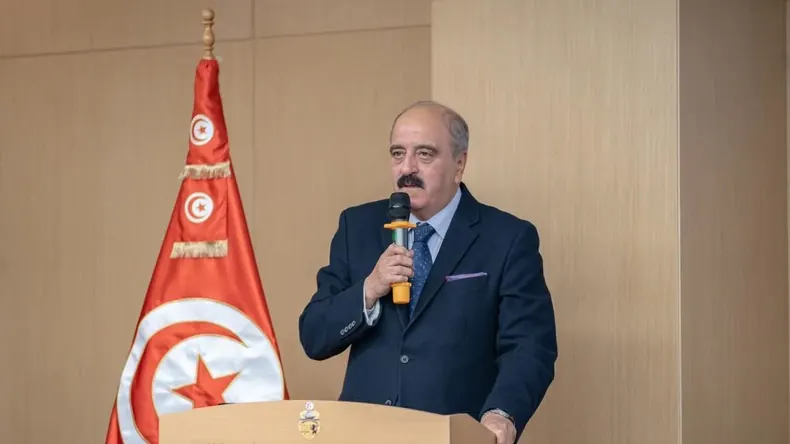
Tunis, 24 November 2025 – PRESS AFRICA –Long oriented towards the Mediterranean and Europe, Tunisia is gradually reshaping its geopolitical outlook to anchor itself more firmly in Africa's dynamics. While its historical position naturally ties it to the Maghreb, internal crises and the continent's geopolitical shifts are pushing Tunis to broaden its diplomatic and economic horizons beyond its traditional partners.
But what is Tunisia's real share in African integration? What levers is it using, and what obstacles still hold back its engagement?
An underused geographical position
Located at the junction of North Africa, the Sahel and the Mediterranean, Tunisia has major assets for becoming a bridge between Europe and Africa. Yet for decades, this African dimension was relegated to the background in favour of a strengthened partnership with the European Union, an economic anchoring centred on the Mediterranean and a diplomacy turned towards the Arab world.
The post-2011 political transition prompted the country to reconsider its continental role, notably because of its sought-after diversification of economic partners, growing competition with other Maghreb countries and the opening of new African markets, particularly in ICT, health and higher education.
A reactivated African diplomacy
In recent years, Tunis has strengthened its presence on the African stage by relying on a growing number of economic missions in West and Central Africa; technical cooperation partnerships in the fields of training, health and public administration; and a reaffirmation of its policy of openness to the African market through the AfCFTA, which Tunisia ratified in 2020.
The country is also working to consolidate its role within the African Union, the African Development Bank (AfDB), based in Abidjan, and COMESA, which it joined in 2018. These memberships reflect Tunisia's desire to integrate more deeply into African value chains.
Tunisian sectors already established in Africa
Despite limited means, certain Tunisian sectors have succeeded in making their mark in several African countries. They include, in particular, health, education, information technology and construction and public works.
Health: Tunisian medical missions are deployed in more than ten African countries. Tunisian clinics welcome thousands of African patients each year for specialist care.
Higher education: Tunisian private universities are attracting a growing share of French-speaking African students. Educational cooperation agreements are multiplying with Central and West Africa.
Information technology: Tunisian ICT companies offer solutions in e-government, banking digitalisation and cybersecurity. They take part in administrative modernisation projects in several African capitals.
Public works and engineering: Tunisian design offices are present in the construction of road, energy and health infrastructure.
What about internal turbulence and diplomacy?
Tunisia's potential, however, remains hampered by major challenges, including political instability since 2011, a persistent economic slowdown, high public debt, recurring social tensions and an administration that is at times cumbersome and slow to react.
These constraints limit Tunisia's capacity to carry major continental projects or to rival other African powers such as Morocco, Algeria, Egypt or South Africa.
Between a weakened Maghreb and a changing Africa
One of the obstacles to Tunisia's African integration remains the absence of Maghreb momentum. The deadlock of the Arab Maghreb Union (AMU) reduces, in particular, Tunisia's regional economic reach, the possibility of forming a coherent North African bloc and the country's diplomatic weight in continental negotiations. The Algerian-Moroccan standoff and the closure of the border between Rabat and Algiers complicate any shared vision of North Africa.
The AfCFTA: an opportunity to seize
Tunisia sees in the African Continental Free Trade Area (AfCFTA) a way to diversify its exports, attract investment, become a Mediterranean-African hub and develop its SMEs towards sub-Saharan markets.
A remarkable intellectual and cultural contribution
Beyond the economy, Tunisia plays an important role in African academic output, in forums on democracy and governance, and in the circulation of ideas and of French-speaking African elites. Tunisian culture, renowned for its openness and cosmopolitanism, continues to project the country across the continent.
A real share, but one still in the making
Tunisia's participation in African integration is modest but real, promising but still limited. But to become a major player in African integration, Tunis will have to stabilise its political scene, modernise its administration, strengthen its logistics infrastructure and clarify its long-term African strategy.
Tunisia has the skills, the knowledge and the geographical position to play a more ambitious role. It remains to give it the political, economic and institutional means to match its ambitions.
Writer: Saïd TESSILIMI

Leave a Comment