24 November 2025—PRESS AFRICA— Since the early 2000s, Morocco has established itself on the African and Arab stage as a singular case: a kingdom engaged in gradual institutional reform, sustained economic development and an assertive diplomacy. This governance model, often presented as a "Moroccan way" reconciling political stability and modernisation, continues to shape the country's trajectory profoundly. But it also prompts debate about its limits, particularly in local governance, public freedoms and the reduction of social inequalities.
An executive monarchy at the centre of the system
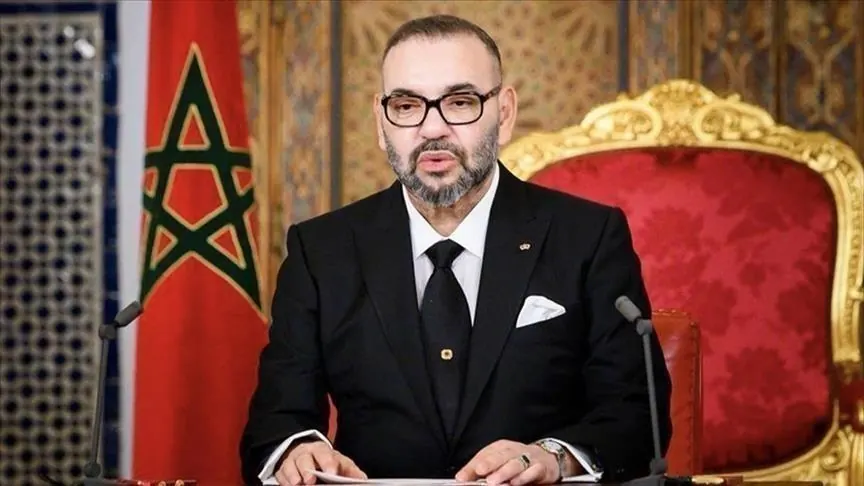
At the heart of the Moroccan governance model lies a constitutional monarchy whose prerogatives remain extensive. King Mohammed VI, in office since 1999, is at once head of state; supreme religious authority (Commander of the Faithful); a major economic player through the royal holdings; and guiding force behind the country's major national strategies.
This centrality ensures a political stability that is rare in the Maghreb region, where several neighbours have experienced chaotic transitions. Royal power acts as an arbiter between institutions, government coalitions and socio-economic actors, which limits institutional crises but reduces the real autonomy of the government.
Institutional reforms under control
The 2011 Constitution, adopted in the context of the Arab Spring, strengthened Parliament and the government, while introducing advances such as the separation of powers, fundamental freedoms and advanced regionalisation, whose implementation remains partial on the ground.
The main strategic levers – diplomacy, security, major economic projects – remain steered by the Palace. This "dual governance" allows strong strategic coherence, but it leads to overlapping responsibilities and weak accountability among political actors.
A recognised but unequal development model
Morocco has succeeded in positioning itself as a regional economic hub, notably through a proactive industrial policy (automotive, aerospace, textiles, phosphates); the development of strategic infrastructure (Tanger Med, roads, ports, high-speed rail); and a firmly embraced economic openness (AfCFTA, EU and US partnerships, African investments).
These choices have produced tangible results, namely growth above the regional average, appeal to foreign investors and technological upgrading in certain sectors.
However, the benefits remain unevenly distributed. This refers to persistent divides between urban and rural areas, high youth unemployment, significant regional disparities despite regionalisation, and an informal economy estimated at between 25 and 30% of GDP.
The New Development Model (NMD) launched in 2021 acknowledges these limits and sets new social objectives, but its implementation remains gradual.
An assumed African leadership
On the continental stage, Rabat pursues a proactive economic diplomacy. This includes, among other things, massive investments in banking, telecoms, insurance and agri-food; religious and cultural cooperation with West Africa; the development of energy and agricultural alliances; and the strategic returns of the Moroccan diaspora in Africa. This positioning has strengthened Morocco's influence, notably in the Sahel and sub-Saharan Africa.
The Sahara question: a structuring pillar
Modern Moroccan governance is built heavily around the Western Sahara question, a major political issue. Recent diplomatic advances — notably US recognition under the Trump administration and the support of several African and Arab countries — reinforce the kingdom's leadership.
However, this issue absorbs a large share of foreign policy, high military budgets and constant diplomatic communication. It remains a point of regional tension and largely conditions internal reforms.
Social progress, but…
Morocco has recorded progress in the fight against poverty, access to healthcare and health insurance (AMO), the extension of social coverage, and women's rights (Moudawana, economic participation).
However, challenges remain, including the slow pace of judicial reform, the limited perceived independence of the media, pressure on human rights defenders and the uneven quality of public education.
A model between stability, control and modernisation
The Moroccan governance model is characterised by a subtle balance based on a strong monarchy that ensures stability and drives the strategic vision; pluralistic political institutions that are still limited in their autonomy; a dynamic but socially unequal economy; and an effective diplomacy backed by growing influence on the continent.
This model has allowed Morocco to maintain an upward trajectory in a regional environment that is often unstable. However, the durability of this governance will depend on its capacity to reduce inequalities, strengthen trust in institutions, speed up regionalisation and modernise political practices. The kingdom is resolutely advancing along a path where stability and reform must now move forward together.
Reporter: Saïd TESSILIMI

Leave a Comment